Why does Whistler spend so little on Fire Response & Prevention?
Written in 2018 and kept as originally published. Ages, figures and references to “recent” events reflect that time.
We have been hearing about all the good things the RMOW has done, but would it surprise you to know that our Fire Response and Prevention budget is considerably less than what other communities nearby spend? West Vancouver and both the City and District of North Vancouver spend 18-20% of their budget, while in Whistler is a little over 5% is dedicated.
The RMOW has spent an additional $1 million on the clearing and thinning (choosing the lesser option of the Blackwell Report), plus some grants, a Fire Smart program, and some cameras, but if you add all this up, we still don’t reach 7% of our budget.
While the North Shore cities are like us with lots of green belt, much of their land borders the ocean, while we are embedded in a high risk forest. If a major fire breaks out on the North Shore, they can draw on each other for reinforcements, just minutes away. Whistler’s mutual aid centres are much smaller, less capable units, and are 45 minutes away at best. Whistler is surrounded by high risk C2 and C4 forests, a very serious fire threat as identified by the Blackwell Report commissioned by the RMOW. Our situation is much more precarious, yet these North Shore cities have budgeted 18-20%, compared with our 7%.
I don't know about you, but I do not want to turn on the television one night to an episode of "60 Minutes–What happened in Whistler?" and hear Anderson Cooper state something along the lines of, "In the post fire investigation, it should be noted that the RMOW placed a significantly lower than usual amount of money toward fire response and prevention than similar cities in the region, this despite being given a clear indication by the respected consultant they commissioned of the dangers that lay before them. Whistler’s attitude to safety measures mirrors that of the Titanic’s."
Is that all this valley is worth? A budget of 5% or 7%, or even 10%, when districts around us are doing so much more? And again I will say it: one area we can do something about is changing our minds about the Blackwell Report’s recommendations and spending that extra $1 million a year on Option 2, the option that brings us to safety in 20 years rather than the 40-year schedule now being followed.
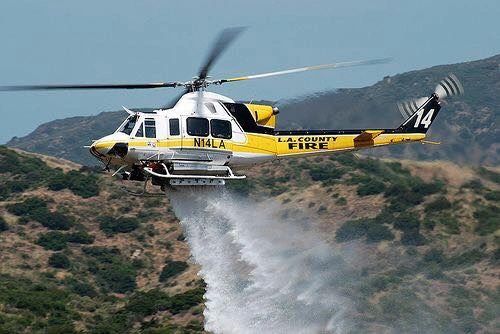
Stu Wild’s proposed "Whistler First" fire attack and rescue helicopter had a budget of $1 million a year; if we tossed that in, we would still be under 10% and we’d have one fantastic first-strike option, a helicopter, that could fly right over your house (legally) and drop water on it. Most fire departments in California have these types of helicopters for this very reason. If we added this in, we would still be well below West Vancouver's budget.
So in the meantime, as we do some much needed fire mitigation and thinning over the next forty years, let’s pray that no stray lightning spark or carelessly tossed cigarette signals a devastating wildfire that gives the news teams so much to talk about.
Originally published October 17, 2018 on lancebright.com.